




















Cookies help us deliver our services. By using our services, you agree to our use of cookies.
Search
[CHF] Swiss Franc
English
- Fishing license
- New Products
- Predator
- Trout
- Fly Fishing
- Carp
- Catfish
- Strike
- Sea
-
Clothing
- Fishing jackets
- Hoodies, fleeces & sweaters
- Fishing T-shirts, Polos, and Shirts
- Fishing Pants, Bibs, and Shorts
- Fishing vests and chest packs
- Waders and Hip Boots
- Boots, Shoes & Sandals
- Polarized sunglasses & Accessories
- Caps, Visors & Hats
- Beanies, Neck gaiters & Gloves
- Thermal underwear & Socks
- UV-blocking Clothing and Sun protection accessories
- Various
- Navigation
- Hunting
- Decor & Gifts
- Brands
Filter
Filter by price
Filter by manufacturer
Jig Heads
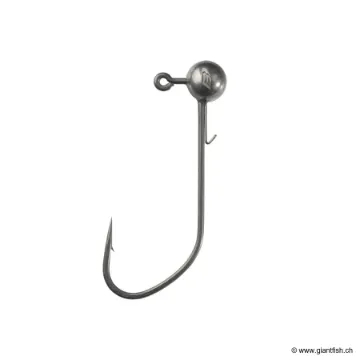

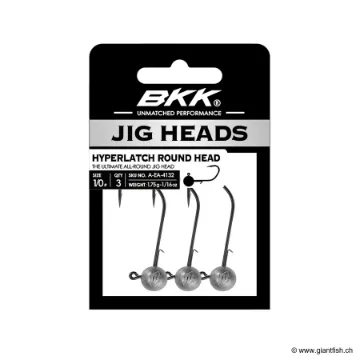
BKK Hyperlatch Round Head Jig Head
Weighted jig head BKK Hyperlatch Round Head for soft bait rigging, with a wide-gap hook, secure bait holder, and Super Slide coating for versatile fishing.
2.95 (CHF) incl tax
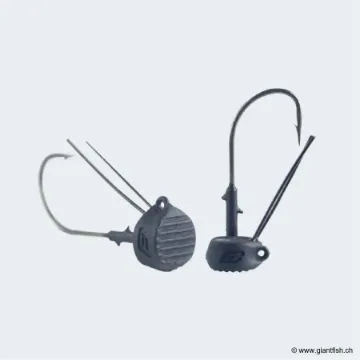
BKK Silent Chaser Draggin' Ned Weedless Jig Head
The BKK Draggin' Ned jig head is designed for Ned Rig setups and finesse bottom fishing: recessed anti-snag eye, ultra-sharp hook with SS coating, reinforced forged bend, and effective bait retention, even with demanding soft plastics.
6.70 (CHF) incl tax
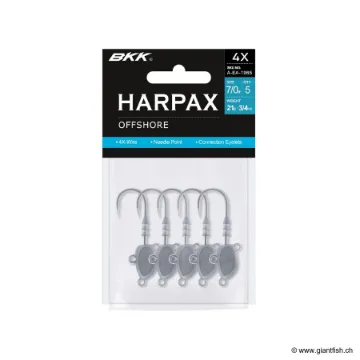
BKK Harpax Offshore Jighead
Ultra-strong offshore jighead by BKK Harpax Offshore for saltwater fishing with soft lures, corrosion resistance, extra eyelets, and secure lure holding.
8.40 (CHF) incl tax
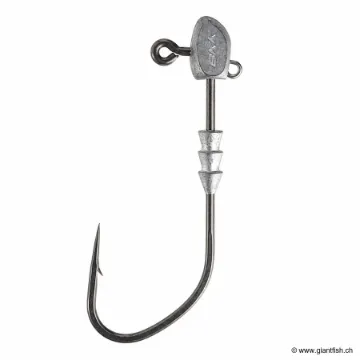
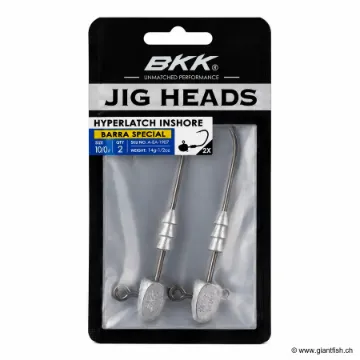
BKK Hyperlatch Inshore Barra Special Jig Head
Reinforced BKK Hyperlatch Inshore Barra Special jig head for inshore fishing: Hyper Carbon steel, wide gap, stainless assist eyelet and Super Slide coating for secure hooksets on powerful coastal predators.
8.40 (CHF) incl tax
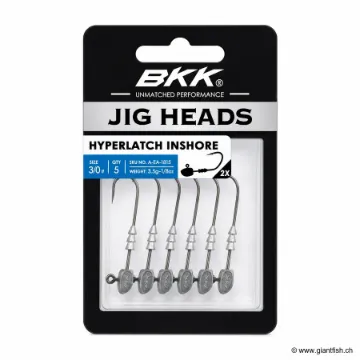
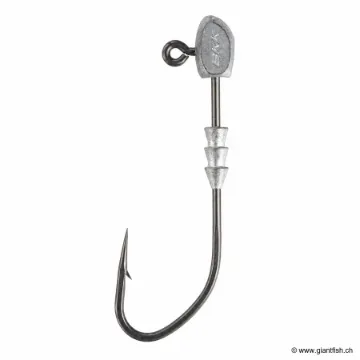
BKK Hyperlatch Inshore Weighted Jighead
The BKK Hyperlatch Inshore is a rugged weighted jighead made from Hyper Carbon Steel, designed to rig soft lures efficiently with fast penetration and secure hold thanks to a wide gap and a versatile bait keeper.
6.70 (CHF) incl tax
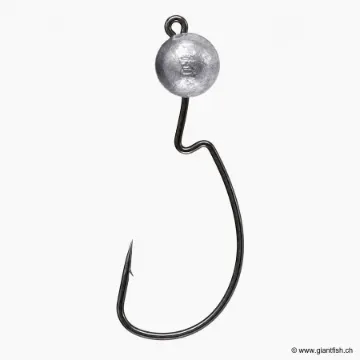
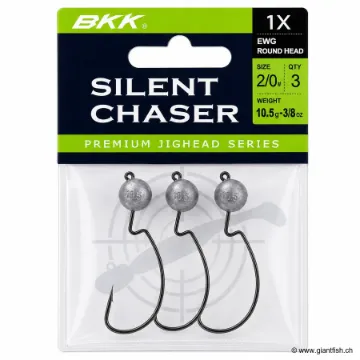
BKK Silent Chaser Round Head EWG Weighted Jig Head
Round offset EWG weighted jig head by BKK for soft lures, designed for a versatile Texas rig, fast hook penetration, and a natural presentation for bottom dragging or steady retrieve.
5.05 (CHF) incl tax
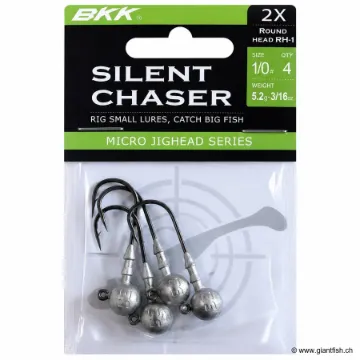
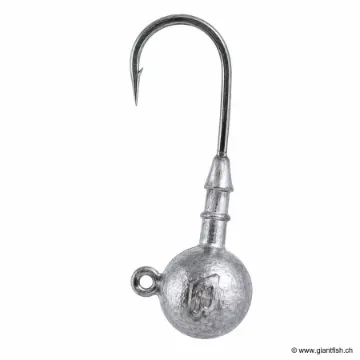
BKK Silent Chaser Round Head RH-1 Jig Head
The round jig head BKK Silent Chaser Round Head RH-1 is designed for soft lure fishing in both freshwater and saltwater, with a strong 2X frame, a medium shank, and a durable point for subtle and effective presentations.
5.05 (CHF) incl tax
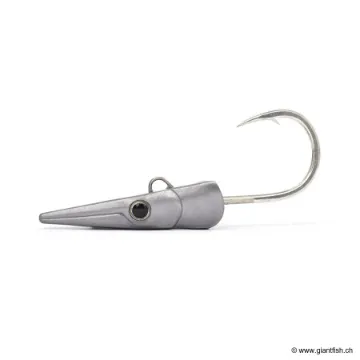
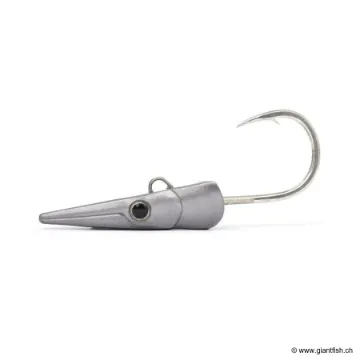
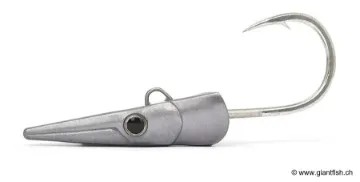
XORUS Coyotte II Matt Tuna Lead Head
XORUS Coyotte II Matt Tuna 120g: expert sea lure for tuna fishing — performance, durability and XORUS innovation for expert anglers.
11.55 (CHF) incl tax
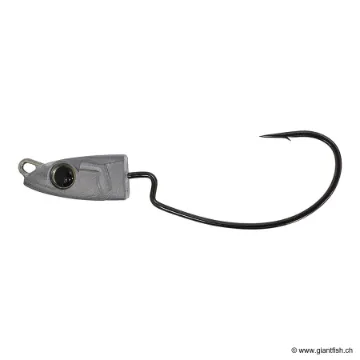
XORUS Ultimate Texas EEL Jig Head
The XORUS Ultimate Texas Eel is a bismuth jig head with an ultra-sharp offset hook. Ideal for linear fishing, traction, or in heavy cover areas.
10.35 (CHF) incl tax
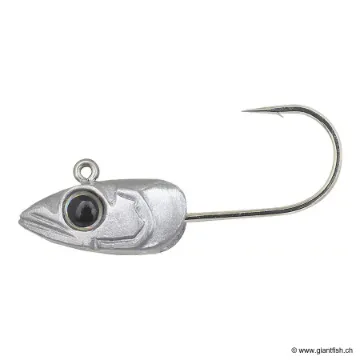
XORUS Ultimate EEL Mat Jig Head
The XORUS Ultimate Eel Mat jig head is perfect for sea fishing, featuring a streamlined design that reduces water resistance and an ultra-sharp Decoy hook for better efficiency.
6.45 (CHF) incl tax
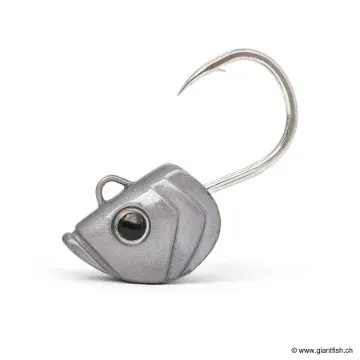
XORUS Ultihead Matt Tuna Jig Head 40 g
XORUS Ultihead Matt Tuna Jig Head 40g, perfect for medium and large tuna thanks to its Decoy JS-2 4/0 hook. Compatible with shads.
10.10 (CHF) incl tax
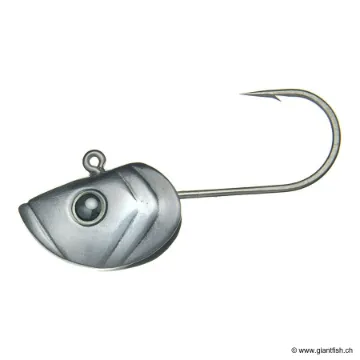
XORUS Ultihead Matt Evo Jig Head
XORUS Ultihead Matt Evo Jig Head – 60g, Decoy 7/0 hook, ideal for soft lures.
2.25 (CHF) incl tax
- 1
- 2
Jig heads are a key element for successful saltwater fishing with soft plastics. They let you control running depth, sink rate, and how your lure is presented in current and wind. Choosing the right jig head means optimizing every cast and increasing your chances of connecting with fish.
Choosing the right saltwater jig head
In saltwater, your choice of jig head depends on several factors: depth, current strength, wind, soft plastic size, and target species. A head that is too light will not get down properly, while one that is too heavy will spoil the lure's action.
- Shallow areas (1–5 m): light heads, usually from 3 to 10 g.
- Jetties, harbors, rocky shorelines: 10 to 20 g depending on the current.
- Boat fishing, holes and drop-offs: 20 to 60 g, or even more for vertical fishing.
Matching the weight to the conditions keeps your lure as long as possible in the strike zone, where sea bass, pollock, mackerel or bream-type fish are holding.
Shapes and types of jig heads
The shape of a jig head affects how the lure swims and how it moves through the water or over structure.
- Round head: versatile, ideal for simple straight retrieves.
- Streamlined or bullet head: better penetration in water and current, useful for deeper fishing.
- Stand-up or football style: keeps the lure standing on the bottom, effective for fish tight to the substrate.
- Texas jig heads: hook hidden in the lure, reducing snags in rocks and weed beds.
Match the head shape to the type of soft bait (shad, finesse, creature, etc.) to get a natural, consistent action.
Techniques and rigs with jig heads
Jig heads can be used for many saltwater techniques, from shore or from a boat.
- Straight retrieve: steady winding, ideal for quickly covering water.
- Hopping or lift-and-drop: alternating lifts and drops to make the lure jump near the bottom.
- Vertical fishing: precise control of the descent under the boat, very effective on marks spotted on the fish finder.
- Rockfishing and ultralight: small jig heads and tiny lures to target rockfish and small predators.
Vary retrieve speeds and pauses to trigger strikes from following or wary fish.
Target species and seasonality
Throughout the seasons, jig heads can be adapted to changing fish behavior. In spring and summer, predators are often more active near the surface and along the edges: lighter heads allow for slow, gliding presentations. In fall and winter, fish may move deeper and become more finicky, which calls for heavier weights to hold bottom even when the sea is rough.
Sea bass, pollock, mackerel, bonito or bream-type species can all be targeted with soft plastics rigged on jig heads, as long as you match lure size, rod power and line diameter.
Hook care and selection
In saltwater, it is important to rinse your jig heads regularly in fresh water to limit corrosion. Choose strong, sharp hooks sized to your soft baits and the power of the fish you are targeting. A hook that is too small may bend out, while an oversized hook will restrict the lure's action.
Saltwater jig heads FAQ
What jig head weight should I use in saltwater? For light inshore fishing, jig heads from 5 to 15 g are often enough. As depth increases or current strengthens, step up to 20 to 40 g, or even more for vertical fishing from a boat.
What colors work best for jig heads? Natural or metallic finishes work well in clear water and bright sun, while brighter colors (chartreuse, orange, phosphorescent) can improve lure visibility in stained water or low light.
How can I avoid snagging on rocks? Use Texas jig heads or shapes designed for snaggy areas, and work your lure just above the bottom while keeping an eye on line tension to avoid catching the rocks.
Can I use the same jig head on different soft plastics? Yes, as long as the hook size matches the length of the soft bait. The hook point should exit roughly in the middle of the lure to ensure solid hook-ups without killing the action.
Payment options


