

























Cookies help us deliver our services. By using our services, you agree to our use of cookies.
Search

[CHF] Swiss Franc
English
- Fishing license
- New Products
- Predator
- Trout
- Fly Fishing
- Carp
- Catfish
- Pole Fishing
- Sea Fishing
-
Clothing
- Fishing jackets
- Hoodies, fleeces & sweaters
- Fishing T-shirts, Polos, and Shirts
- Fishing Pants, Bibs, and Shorts
- Fishing vests and chest packs
- Waders and Hip Boots
- Boots, Shoes & Sandals
- Polarized sunglasses & Accessories
- Caps, Visors & Hats
- Beanies, Neck gaiters & Gloves
- Thermal underwear & Socks
- UV-blocking Clothing and Sun protection accessories
- Various
- Navigation
- Hunting
- Decor & Gifts
- Brands
Filter
Filter by price
Filter by manufacturer
Landing Nets & Gaffs
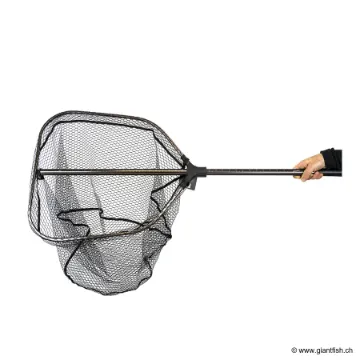

Adams Built Aluminum Landing Net for Salmon Steelhead (ABASSN24)
Adams Built Steelhead ABASSN24 aluminum landing net with graduated telescopic handle and large net designed for big predators fishing from boat or kayak.
140.10 (CHF) incl tax
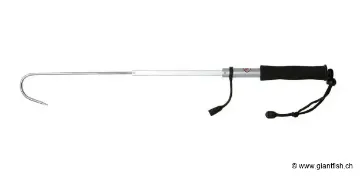
Landing nets and gaffs for saltwater fishing
Landing nets and gaffs are essential accessories for securing fish alongside the boat, on a jetty or from the rocks. When chosen well, they reduce lost fish at the crucial moment, help protect the catch as much as possible and give you better control during the fight, even with big saltwater fish.
How to choose a saltwater landing net
A good saltwater landing net combines a solid frame, a handle suited to your fishing spot and a net designed for your target species. Aluminum or carbon frames offer excellent strength while staying lightweight. The depth and size of the net depend on the fish you target and whether you fish from shore or by boat.
- Fishing from a boat: choose a wide net with a short or medium handle that is easy to handle in a confined space.
- Fishing from shore or jetties: a long, often telescopic handle lets you reach fish below ledges or down the wall.
- Rubber or coated mesh: helps reduce injuries, limits hook tangles and makes releasing fish easier.
Season also plays a role: in summer, when activity is higher and catches can be more frequent, a strong, fairly deep net offers more comfort. In winter, lighter and more maneuverable models are appreciated for more mobile fishing.
Choosing the right saltwater gaff
The gaff is reserved for fish you plan to keep, when a landing net becomes hard to use, especially on big fish from a boat. Telescopic models are practical to adapt to gunwale height or the distance to the fish.
- Handle length: short for small boats or kayaks, longer for boats with high gunwales.
- Hook shape and size: adjust to the size of the fish you target for precise, controlled hooking.
- Safety: protective caps, lanyards and non-slip grips make for safer use in choppy seas.
Real-world use and techniques
When netting a fish, guide it headfirst, smoothly, without lifting the landing net at arm's length. It is better to slide the net under the fish and then raise the frame. When fishing with a partner, one angler focuses on the fight while the other handles the net or gaff.
For drift fishing, surfcasting or rock fishing, always anticipate the arrival of the fish: extend the telescopic handle in advance, check the locks and plan your angle of approach according to swell and current.
Care and safety for your gear
After every saltwater trip, rinse landing nets and gaffs thoroughly with fresh water to limit corrosion, paying particular attention to joints, telescopic locks and net attachments. Let everything dry completely before storage to avoid bad odors and preserve the materials.
Regularly inspect screws, gaff points, mesh and handles. Simple but consistent maintenance extends the life of your gear and ensures reliable operation at the critical moment.
FAQ: landing nets and gaffs
What size landing net for saltwater bass or pollack? A net head about 20 to 28 inches wide with a deep mesh is a good choice. From shore, go for a longer telescopic handle to compensate for height.
When should I use a gaff instead of a landing net? A gaff is mainly used from a boat on fish you intend to keep and when a landing net would be too bulky or hard to handle on big specimens.
Is a rubber landing net suitable for saltwater? Yes, it is particularly useful to reduce injuries and hook tangles, even in saltwater, as long as you rinse it thoroughly after each trip.
Do I need a telescopic handle? It is very useful to adapt to different spots, whether on a boat, rocks or docks. It keeps transport size compact while offering good reach when fishing.
Payment options


