Product benefits
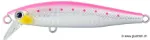
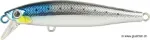
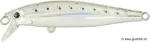
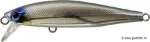
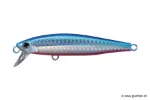
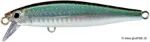
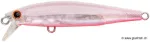
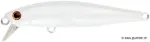
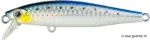
The SMITH LOURDISH sinking lure is a dense hardbait specially developed for targeting predatory fish in saltwater. Its robust construction and compact silhouette make it an ideal choice when the wind picks up, seas build, or you need to reach distant feeding zones. Thanks to its streamlined body it casts long, stays perfectly stable in flight and starts working immediately upon contact with the water. Its lively action blends tight oscillations with a slight roll that produces strong vibrations, mimics a panicked baitfish and triggers reflex strikes from predators even in mid-water. This saltwater SMITH lure maintains consistent behavior on a steady retrieve, allowing rapid coverage of large areas, yet it also accepts speed and rhythm variations to fool wary or educated fish. The through-wire construction, a signature of the range, secures fights with large fish and leaves broad choice for split rings and hooks. Whether fishing rocky points, breakwaters, current zones or deeper marks, the SMITH LOURDISH offers an excellent balance of casting distance, line hold and swimming effectiveness.
Technical specifications
- Hard sinking lure designed for saltwater predatory species fishing in mid-water or near the bottom.
- Compact, dense body shaped to optimize aerodynamics and stability for long casts and steady retrieves.
- Integral through-wire construction connecting attachment points for maximum reliability during powerful, repeated fights.
- Dynamic action combining tight wobbling with a slight rolling motion, generating flashes and attractive vibrations.
- Performs particularly well on a steady retrieve at medium to fast speeds, while accepting pauses, bursts and strong accelerations.
- Allows you to explore different water layers by adjusting fall time before the action, from mid-water to structure edges.
- Attachment rings sized to accept various split rings and single or treble hooks depending on regulations and fishing strategy.
- Suitable for shore use (cliffs, breakwaters, rocky points, exposed beaches) as well as boat fishing (drifts, marked marks, ledges and drop-offs).
- Effective on many saltwater predators such as sea bass, pollack, coastal pelagics and other opportunistic predators.
Advantages and strengths
The main advantage of the SMITH LOURDISH sinking lure lies in its ability to combine casting power, compactness and impeccable line-holding. Its density allows it to punch through the wind and reach distant feeding birds, while maintaining a stable trajectory that reduces tangles and unwanted twirling. Once in the water it comes alive quickly, offering a tight, highly vibratory action that remains effective even on fast retrieves when you must keep up with very mobile fish or simulate a fleeing prey. This lively yet natural signature makes it an excellent saltwater prospecting lure for covering large areas: harbor walls, rocky heads, shallows, sandy or mixed flats. The through-wire construction provides real peace of mind: it withstands the stresses of muscular fights, heavy drags and sudden direction changes imposed by marine predators. This is a major asset for anglers who regularly target large fish or fish in snaggy areas where heavy braking is required. The lure’s versatility is another decisive plus: the SMITH LOURDISH performs equally well on fast continuous retrieves, sawtooth animations, jerk-and-pause sequences or slower retrieves above structure. It adapts to fish mood and sea conditions from mirror-flat to rough water. Its ability to remain effective near the bottom without hanging up or bouncing off excessively makes it deadly for focusing on precise spots such as drop-offs, rock heads or strong current seams.
Usage tips
To get the most from the SMITH LOURDISH sinking lure, pair it with a saltwater rod rated for dense lures, a smooth reel and a fine but strong braided line. A sufficiently long fluorocarbon leader increases stealth and abrasion resistance around rocks and structure. On the cast, don’t hesitate to exploit the lure’s long-distance potential when fishing for sea bass by targeting current edges, rock heads or offshore boils. Let it sink for more or less time depending on the layer you want to probe, then start a steady retrieve. Early in the session a fairly brisk speed often helps locate active fish. Once bites are found, refine your approach by alternating fast phases and slow-downs, adding short sharp jerks followed by brief pauses to trigger hesitant follows. In deep sectors or areas with strong currents, allow the SMITH LOURDISH to take some depth before tensioning the line and starting the action, keeping constant contact to detect even the lightest take on the fall. From a boat you can cast upstream of the mark and let it work on the drift, or cast toward emergent structures to sweep the edges. Regularly vary swimming depth, speed and jerking amplitude to find the combination that will produce strikes that day.
FAQ
Question 1 : Is this lure suitable for beginner anglers?
Answer: Yes, the SMITH LOURDISH is very accessible. Its effective action on a simple steady retrieve allows a beginner to catch fish without mastering complex animations, while offering plenty of room for progression for experienced anglers.
Question 2 : Can this sinking lure be used in freshwater?
Answer: Although primarily designed as a saltwater predator lure, it can be used in freshwater on powerful species where local regulations and conditions allow, particularly to fish deep or fast-current areas.
Question 3 : Should I favor a fast or slow retrieve?
Answer: The SMITH LOURDISH sinking lure performs especially well on a fairly fast steady retrieve to imitate a fleeing prey, but it remains very effective when alternating slower phases, sharp jerks and short pauses. The ideal is to adapt speed to fish activity and sea conditions.