






















Search
[CHF] Swiss Franc
English
All Categories
Menu Close
Filter
Filter by price
Filter by manufacturer

Predator

View as Grid List
Sort by
Display per page

Suspending Lure DUO Realis Jerkbait 100 SP - 10 cm

The DUO Realis Jerkbait 100 SP is a suspending jerkbait designed to move significant water, cast long distances and entice predators thanks to a tungsten mass transfer system and a complex multi-frequency sound signature.
18.95 (CHF) incl tax

Floating Lure DUO Realis Jerkbait 100 DR - 10 cm

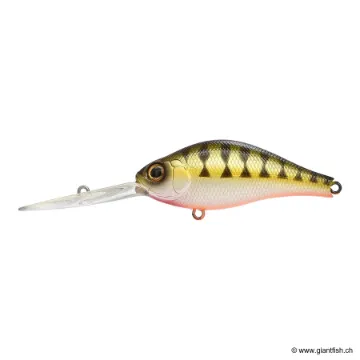
The DUO Realis Jerkbait 100 DR is a deep jerkbait of the longbill minnow type, designed to quickly prospect mid and deep water layers. Thanks to its elongated bill and realistic action, it triggers predator strikes even in heavily fished areas where classic crankbaits no longer convince wary fish. Versatile, it remains effective at all retrieval speeds, from slow prospecting to power fishing.
18.95 (CHF) incl tax

Floating Lure DUO Realis Crank M62 5A - 6.2 cm

Versatile DUO M62 5A crankbait for predator fishing, featuring a magnetic mass transfer system for long, accurate casts and a mid-depth swim ideal for prospecting shallow areas like edges and flats.
19.95 (CHF) incl tax

Floating Lure DUO Realis Crank Kabuki Bottom Rush 48 MR - 5 cm

The DUO Realis Crank Kabuki Bottom Rush 48 MR is a medium runner crankbait designed to efficiently prospect the mid-water column. Compact and easy to animate, it produces a particularly attractive action even at very low speed, making it a versatile hard bait for predator fishing in freshwater, in rivers and lakes, from shore or boat.
16.95 (CHF) incl tax

Floating Lure DUO Realis Crank G87 20A - 8.5 cm

The DUO Realis Crank G87 20A is a deep-diving crankbait designed to quickly reach the zone of large predators while offering a stable, powerful and highly vibrating action, the result of meticulous development led by Masahiro Adachi.
23.95 (CHF) incl tax

Getting ready for predator fishing

The Predator category brings together all the tackle dedicated to chasing freshwater predators such as pike, zander, perch and catfish. Whether you are just starting out in predator fishing or looking to fine-tune your rigs, choosing the right gear is essential to fish efficiently and with confidence.

Before each trip, think about the body of water, depth and target species. These factors determine rod power, reel type, line strength and which family of lures you should favor.

Choosing rods, reels and lines

A predator rod must offer a good balance between sensitivity and power reserves. For bank fishing with lures, anglers often prefer fast-action rods from 6'11" to 8'10" (2.10 m to 2.70 m), able to cast accurately and set the hook firmly. On a boat or float tube, shorter models improve maneuverability.

The reel has to be strong and smooth, with a reliable drag. Match its size to the techniques used and the average size of the fish you are targeting. For the main line, braid is widely used in predator fishing thanks to its sensitivity and low stretch, combined with a fluorocarbon or wire leader to withstand the teeth of predatory fish.

Must-have lures for predators

Lures are at the heart of predator fishing. A varied selection lets you adapt quickly to changing conditions:

  • Soft lures: shads, finesse baits, creature baits, perfect for pike, zander and perch when fished in a straight retrieve, vertically or with pulling techniques.
  • Hard baits: minnows, jerkbaits, crankbaits to cover different water layers and trigger reaction bites.
  • Spinnerbaits and chatterbaits: very effective in colored or snaggy water, where their vibrations help fish locate the lure.
  • Spoons and blades: reliable options to cover water quickly and target active fish.

Vary size, color and vibration according to water clarity, light conditions and fish activity.

Techniques and approaches through the seasons

Predator fishing can be practiced all year round, but approaches change with the seasons. In cold periods, slow presentations close to the bottom with soft lures or subtle hard baits often give the best results. In spring and summer, fish are more mobile: do not hesitate to speed up your retrieves, fish higher in the water column and try louder or more aggressive lures.

Also adapt the areas you cover: shorelines, weed beds and shallow zones in warm water, deeper holes, drop-offs and structures when predators hold off the bank.

Practical accessories and organization

Beyond rods and lures, a few accessories make predator fishing and fish handling easier: long-nose pliers, suitable landing nets, ready-made leaders, split rings, strong snaps. A good lure box, pouches for jig heads and clear storage will save you time on the bank or in the boat.

Think about comfort and safety as well: clothing suited to the conditions, polarized sunglasses to read the water better, and a few tools to maintain and adjust your rigs.

Predator Fishing FAQ

What combo should I choose to start predator fishing? To begin, a versatile medium-power spinning combo, a reasonably thin braided line and a small selection of soft lures and hard baits will cover most situations.

What lure size should I use for pike, zander and perch? For pike, anglers often use larger, bulkier lures; for zander, medium sizes that match natural prey; and for perch, more compact, discreet profiles.

Do I always need a wire leader for predator fishing? Not always. A wire leader is recommended for pike, while a more discreet fluorocarbon leader is often preferred for zander and perch, with the diameter adjusted to the risk of bite-offs.

How can I vary the action of my predator lures? Alternate retrieve speeds, add pauses, use shorter or longer pulls and change depth. Testing different actions in the same area often helps trigger additional bites.