Product Highlights
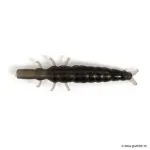
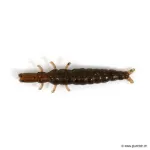
The NIKKO Dappy Caddisfly is a caddisfly larva imitation, also known as a caddis worm, an essential prey item in the diet of salmonids. By faithfully reproducing this recognizable silhouette, it helps you adapt your approach when trout focus on drifting invertebrates and larvae present on the bottom.
Designed for a natural presentation, this model is aimed at anglers looking for a discreet, relevant, and effective artificial lure, especially for trout fishing in flowing water. It fits easily into many tactics: drift fishing, covering current seams, subtle action close to the substrate, or precise targeting of holding spots (riffles, banks, drop-offs, slack water).
Thanks to its highly identifiable “larva” profile, the Dappy Caddisfly helps trigger bites when fish are wary, when the water is clear, or when trout are feeding on small prey and ignoring overly aggressive presentations. It is a smart choice to complement a selection focused on insect imitations and improve results on educated fish.
Technical Features
- Type: artificial caddisfly larva (caddis worm) imitation for trout fishing.
- Use: drift presentation and bottom-oriented fishing with subtle action.
- Environments: rivers, streams, and current lines, with possible adjustment depending on depth and flow speed.
- Approach: discreet, realistic, designed to imitate a naturally consumed prey item.
- Variants: available in different options depending on your needs (without changing the imitation concept).
Benefits and Key Strengths
The main advantage of the Dappy Caddisfly lies in its ability to “speak the same language” as trout: that of everyday food. Caddisfly larvae are among the most consistent resources in many waterways, making this caddis worm imitation relevant over a long period and in many fishing situations.
Its realistic nature makes it an excellent ally for: fine-tuning your selection when fish are difficult, varying your presentations to break away from a classic pattern, and fishing slowly without losing credibility. It is equally suited to systematic spot coverage and opportunistic fishing in areas where feeding activity is visible (runs, current edges, back currents).
In addition, this imitation integrates easily into a trout-oriented setup: suitable leader, adjusted weighting for the current, and short twitches. The goal is to keep the drift as close as possible to the natural behavior of a larva carried by the flow or dislodged from the bottom.
How to Use
To maximize effectiveness, favor a “natural” approach: let the imitation work within the current seam while controlling the drift and limiting overly large pulls. In deeper or faster sections, simply adjust the sink rate and position in the water column by tuning your rig (weighting, retrieve speed, drift angle), so the imitation remains credible and close to the feeding zone.
Alternate between passive drift and small movements (micro-twitches, light pulls, pauses) to imitate a larva trying to hold position. For wary fish, slow down and prioritize accuracy: a well-placed presentation at the right level often triggers more strikes than an overworked one.
After your session, rinse and dry your gear if needed, and store the imitation away from heat to help preserve its shape and appearance.
FAQ
Question 1: Which species is this product best suited for?
Answer: It is particularly relevant for trout fishing and, more broadly, salmonids in flowing water when feeding is focused on larvae.
Question 2: In what conditions is it most effective?
Answer: It excels in rivers and streams, with a discreet approach, especially when fish are wary or the water is clear.
Question 3: Does it need to be worked a lot?
Answer: No: the main advantage is the natural presentation. Controlled drift and a few light actions are usually enough.
Question 4: Can it complement other insect imitations?
Answer: Yes, it is an excellent complement to nymphs and other imitations: it allows you to mimic a very common prey item and expand your options when trout change their menu.