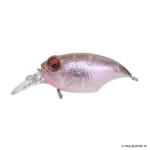
Product Highlights
The Griffon Bait Finesse SR-X is a finesse crankbait designed to cover water quickly while remaining precise and easy to control. Its main advantage is combining long-distance casting with effective action in shallow water, while offering excellent ability to move through structure. For predatory fish anglers, this hard lure is ideal when working banks, obstacles, snaggy spots, and any situation where you want to trigger reaction strikes without hanging up on every pass.
Thanks to its performance-oriented design, this crankbait quickly reaches its working depth and stays stable during retrieval. It fits perfectly into a modern lure fishing approach: methodical searching, repeated casts, varied angles, and a retrieve speed adjusted to fish activity.
Technical Specifications
- Type: finesse crankbait (search hard lure)
- Swimming depth: up to around 1.2 m (depending on retrieve and conditions)
- Obstacle performance: excellent ability to pass through structure (wood, sparse vegetation, rocks)
- Casting distance: optimized to reach distant spots and cover more water
- Action: effective on cast-and-retrieve, pace changes, and pauses
- Use: freshwater, shallow-water searching
Product Benefits and Key Features
A good crankbait is not just about its action: it must also make spot reading and decision-making easier. The Griffon Bait Finesse SR-X crankbait stands out for its intuitive handling: cast far, get tension, and the lure quickly settles into its swimming range. This fast activation is valuable when fish are active in a specific water layer: you lose less time between impact and the truly productive fishing phase.
Another major advantage is its ability to work through cover. When fishing snaggy banks, transition zones (rock/earth, scattered weed, submerged wood), or relief features, a crankbait often triggers a strike when it brushes structure and then comes free again. Here, the design encourages that kind of passage, helping you fish more aggressively around structure with greater confidence.
Finally, its finesse positioning makes it especially useful when predatory fish are cautious or when fishing pressure is high. It keeps the effectiveness of a search lure while remaining relevant for fish that are less willing to strike larger baits aggressively.
How to Use
To get the best from the Griffon Bait Finesse SR-X, use a fan-casting search pattern and vary your angles so the crankbait runs as close as possible to drop-offs, cover, and travel lanes. On a straight retrieve, start at a moderate speed to stabilize the action, then add short bursts of speed: these rhythm changes often trigger opportunistic strikes.
In heavy cover, let the lure work against the structure: when you feel contact, slow down slightly, add a micro-pause, then resume the retrieve. This alternation imitates a prey item trying to escape danger and can convince a following fish. In clear water or when fish are pressured, do not hesitate to extend pauses and fish slower while keeping control of depth.
As for tackle, a responsive rod that still forgives the vibrations of a crankbait, plus a line suited to searching, will help maintain a steady action, reduce lost fish, and let you fish longer with less fatigue.
FAQ
Question 1: What situations is this crankbait best suited for?
Answer: It is particularly effective for predatory fish fishing in shallow areas, when you need to search quickly and run close to cover such as wood, rocks, and sparse vegetation.
Question 2: How should its swimming depth be used?
Answer: After the cast, get the lure under tension quickly and use a steady retrieve: it reaches its swimming zone fast. Then adjust speed and pauses to stay in the target water layer (up to around 1.2 m depending on conditions).
Question 3: Which actions work best?
Answer: Cast-and-retrieve is a strong base, but short speed bursts and brief pauses near cover are often the most triggering actions.