





















Search
[CHF] Swiss Franc
English
All Categories
Menu Close

Landing Nets

View as Grid List
Sort by
Display per page

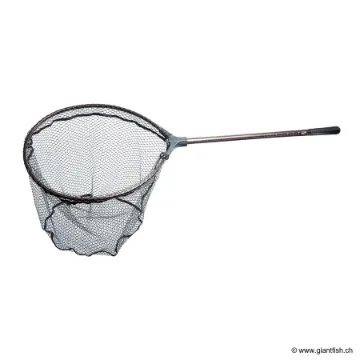
Adams Built Aluminum Landing Net Boat / Shore (ABABN22)

Lightweight Adams Built aluminum landing net, ideal for shore/boat fishing, salmon, trout, streetfishing.
92.45 (CHF) incl tax

Fly fishing landing nets

Fly fishing landing nets are essential for securing your catches while keeping stress on the fish to a minimum. Their compact shape and wide opening let you bring trout and grayling to the bank or into the net without injuring them, whether or not you practice catch and release.

At GiantFish you’ll find models designed for the modern fly angler: lightweight, easy to handle and suitable for both river and stillwater fishing. Choosing the right fly fishing landing net improves your efficiency on the water and helps you treat fish with more care.

Choosing the right fly fishing landing net

Several criteria are worth considering before you buy:

  • Hoop size: a medium opening suits most trout fishing, while a larger frame is useful on stillwaters or for more powerful fish.
  • Handle length: a short net is easy to carry on your back and ideal for wading. A slightly longer handle helps you reach fish in strong currents or from high banks.
  • Weight and balance: choose a light net that won’t get in the way when you’re walking or casting with it on your back all day.
  • Attachment: clips, carabiners and magnetic releases keep your net close at hand without getting in your way.

Materials and mesh types

The materials affect both comfort in use and the service life of your landing net.

  • Wooden frame: stylish and pleasant in the hand, it offers good buoyancy. Ideal for anglers who like the traditional side of fly fishing.
  • Aluminum or composite frame: strong, light and impact resistant, these are well suited to intensive sessions and rough terrain.
  • Rubber mesh: reduces abrasion of the scales and helps prevent hooks from tangling. Highly appreciated for catch & release.
  • Knotless mesh: nylon or other fine synthetic materials are gentle on the fish and dry quickly.

The right compromise depends on your fishing style, the type of river you fish and how often you go out.

Techniques and seasonality

How you use your landing net is just as important as which model you choose. Bring the fish under control with its head facing upstream and slide the net underneath rather than chasing it with the mesh. This approach reduces lost fish and is easier on them.

In spring and early summer, when water levels are higher, a floating and highly visible net is a real advantage. In summer and autumn, more compact models are easier to forget about on your back during long walks between spots.

Rinse your net after every trip, especially if you switch between rivers and stillwaters. Letting it dry completely prevents odors and extends the life of your landing net.

Fly Fishing Landing Nets FAQ

Q: Which mesh is best for catch and release? A rubber or knotless mesh is ideal. It limits damage to the fish’s skin and helps you unhook and release it more quickly.

Q: Is a fly fishing landing net suitable for stillwaters? Yes, as long as you choose a large enough hoop and, if needed, a deeper mesh to secure bigger fish.

Q: How should I carry my landing net when wading? The most practical option is to carry it on your back, attached with a magnet or quick-release clip, so your hands stay free while you fish.

Q: Do I need a different net for river and lake fishing? It’s not mandatory, but adjusting the hoop size and mesh depth to the environment makes life easier and improves safety for the fish.