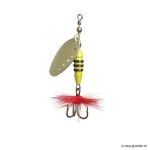
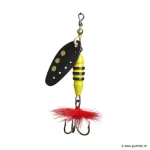
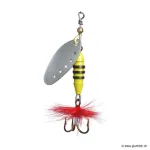
Product highlights
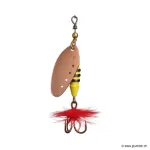
The Sting spinning spoon is a true classic that deserves a permanent place in your tackle box. Its concept is based on a simple, reliable, and highly effective mechanism: a regular rotation, sharp vibrations, and bright flashes capable of triggering fish even when activity is low. This model stands out thanks to a blade pierced with 5 holes of different sizes. This feature changes the water flow and vibration signature, creating a unique action that draws attention and encourages strikes.
Its orange body combined with a natural brass finish creates strong visual contrast. This combination helps it stand out in different conditions, especially when light changes or the water is not perfectly clear. The overall design keeps the spirit of traditional spoons while adding a technical detail (the perforations) that enhances its attraction power.
Technical specifications
- Type: metal lure, spinning spoon style
- Blade: pierced with 5 holes of different sizes for a specific attractive effect
- Body: orange color with a natural brass look
- Hook: fitted with a fly that helps conceal the hook
- Use: lure fishing on the retrieve (steady retrieve, speed changes, pauses)
Product benefits and key strengths
The main advantage of the Sting is its ability to combine flash, vibration, and turbulence in a subtle way. The 5 holes in the blade are not just a cosmetic detail: they affect water resistance and generate a different pulse than a solid blade. The result is a sound and vibration footprint that can make the difference on wary or pressured fish.
The fly on the hook adds an extra touch of attraction. It helps conceal the hook and can extend the fish’s interest during the follow or the strike window, encouraging a more solid hookup. It is also an advantage when fish are focused on small prey: the fly adds volume and a lifelike impression.
In the water, this type of spinning spoon stands out for its versatility. It works for fast searching retrieves as well as slower, more deliberate fishing, depending on retrieve speed and rod angle. It is effective for covering banks, current seams, drop-offs, and shaded areas. The contrasting body and natural brass shine help with visibility, while the rotating blade sends continuous signals that predator fish can detect from a distance.
The Sting is especially useful when you want a simple lure that is easy to fish and capable of triggering a reaction strike. It is a smart choice for building an essential lure selection with a model that can produce bites in a wide range of situations.
How to use
To get the best from the Sting spinning spoon, start with a steady retrieve at moderate speed to ensure stable blade rotation. If the water is cold or fish seem to be following without committing, alternate short bursts of speed with a slower retrieve: these changes create very attractive shifts in vibration.
In rivers, cast slightly upstream or three-quarters upstream and follow the drift while keeping the blade rotating. On still waters, focus on casts along weed beds, structure, or banks. Also consider short pauses: the spoon slows, then starts moving again, which can trigger a strike on the restart.
Use a suitable snap to keep full freedom of movement, and check regularly that the hook and fly remain clean (free of plant debris) to preserve hooking power and attractiveness.
Testimonials
""A simple and effective spoon: the perforated blade really creates a different vibration, and the fly on the hook adds something extra when bites are hesitant.""
FAQ
Question 1: What are the holes in the blade for?
Answer: The holes change water flow and resistance, which alters vibration and turbulence. This signature can attract fish that are less responsive to classic spoons.
Question 2: How can I tell if the blade is spinning correctly?
Answer: From the start of the retrieve, you should feel a regular vibration through the rod. If not, slow down slightly, change the retrieve angle, or check whether debris is preventing rotation.
Question 3: Does the fly on the hook serve a purpose?
Answer: Yes, it conceals the hook, adds volume, and creates a more lifelike effect. It can help turn follows into strikes and improve the hookup in the mouth.