Product Highlights
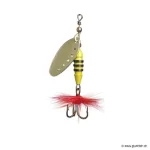
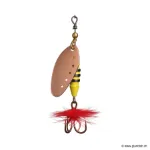
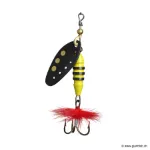
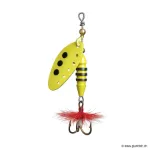
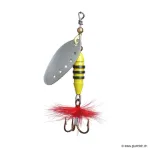
The fishing spinner Sting 18 g is a must-have for any lure box. Designed to trigger strikes when fish are hesitant, it combines a visible body with a carefully shaped blade to produce a highly readable signal underwater. Its key feature is the perforated blade: five holes of different diameters alter water flow and create a distinctive vibration, both sharp and regular, that attracts predators from a distance. In action, this design delivers a dynamic swim with pulse variations that imitate prey in escape mode or disoriented movement.
Another major advantage is the lure’s overall balance, which makes it easy to retrieve steadily at different speeds. Whether you fish with a straight retrieve, stop-and-go, or slightly angled casts, the Sting maintains a consistent action and continues to emit a blend of vibrations and flashes. This exact combination makes the difference in stained water, changing light conditions, or when you need to stand out in heavily pressured waters.
Technical Specifications
- Type: spinner with perforated blade (5 holes of different sizes)
- Weight: 18 g
- Body: orange with natural brass finish
- Hooking: hook with concealment fly
Product Benefits and Key Strengths
The Sting’s strength lies in its “trigger” effect. The open blade is not just aesthetic: it changes the lure’s hydrodynamic behavior and generates an original vibration signature, often different from classic spinners. In practice, this can make follower fish or inactive fish react, because the stimulation is more complex than a simple regular blade beat. The perforations also help create micro pressure changes and a subtle alternation of flashes, improving attractiveness across many types of spots.
The natural brass-looking body gives a convincing “prey” appearance while maintaining a strong visual presence. The whole lure is ideal for targeting predator fish near drop-offs, along banks, in current seams, or above weed beds depending on depth. Finally, the hook dressed with a fly has two advantages: it hides the rigging and adds an extra strike point, useful when fish nip short or hit from behind. This detail can improve hook-up rates, especially when activity is irregular.
In short, if you are looking for an effective spinner lure to cover water, quickly locate fish, and provoke strikes, the Sting 18 g offers a simple but deadly combination: vibration, flash, and a refined finish.
How to Use
To get the most out of this predator fishing spinner, vary your retrieve speeds. Start with a steady medium-speed retrieve so the blade works regularly, then add short bursts of speed to create rhythm breaks. The stop-and-go technique (short pauses followed by a restart) can trigger reaction strikes, especially when fish follow without biting.
Adjust your casting angle: fan-cast to cover different depths and work holding areas such as rocks, stumps, banks, and current breaks. In rivers, cast across or slightly upstream so the blade engages as soon as tension builds. Check the hook and fly regularly after several fish or snags to keep a clean presentation and strong hooking performance.
Testimonials
""A spinner that fishes fast and well: the perforated blade really makes a difference when fish are tough, and the fly-dressed hook improves bites on timid strikes.""FAQ
Question 1: Does the perforated blade really change the action compared with a classic spinner?
Answer: Yes, the holes modify water flow and generate more nuanced vibrations, with variations in pulse and flash that can help trigger wary fish.
Question 2: How should I retrieve the Sting 18 g to maximize strikes?
Answer: Alternate a steady linear retrieve with accelerations and a few short pauses. These changes in rhythm imitate prey in trouble and often provoke an attack.
Question 3: What is the purpose of the fly on the hook?
Answer: It hides the rigging and adds a visual attraction point, useful when fish hit short or attack the rear of the lure.