

























The chatterbait is one of those lures that can really change a session. Vibrant, versatile and deadly for covering water, it often triggers reaction strikes where other lures go unnoticed.
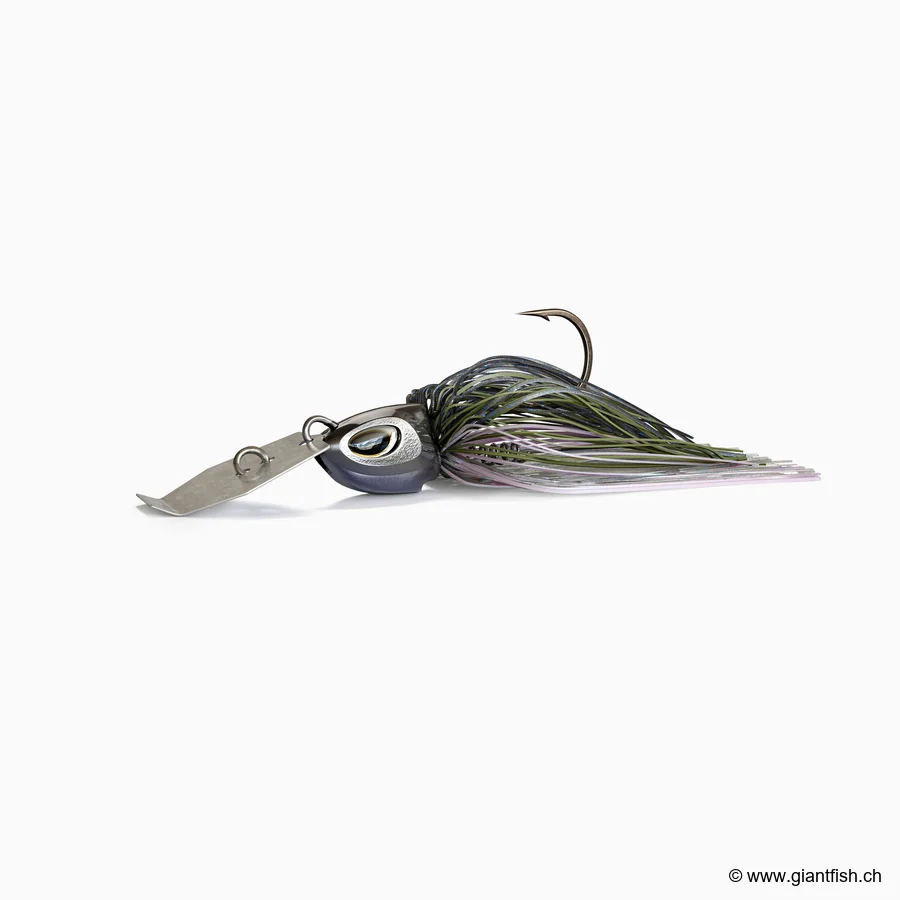
Whether you are targeting pike, perch or black bass, the chatterbait clearly deserves a place in your box. This hybrid lure, also called a bladed jig, combines a jig head, a supple skirt and a metal blade mounted at the front. Once you start retrieving, it produces a powerful vibration and a tight, nervous action that draws predators from afar.
And let’s be honest, that is exactly what makes it so interesting: it is simple to use, but it can be brutally effective. When fish are following without striking, when the water is colored, when you need to cover water quickly, the chatter bait often becomes a weapon of choice.
Key takeaway: a chatterbait is particularly useful for triggering aggressive bites, prospecting quickly and fishing effectively in a wide range of conditions.
What exactly is a chatterbait?
The chatterbait is a reaction lure. Its front blade comes to life immediately from the first turns of the handle. As a result, the lure vibrates hard, pushes a lot of water and creates a signal that predators can easily detect with their lateral line.
Where a spinnerbait relies mainly on the flash of its blades, a chatterbait relies first and foremost on vibration. This seemingly small difference changes a lot of things on the water. In slightly dirty water, in the wind, or when fish are holding on a precise area, that vibration can make all the difference.
It is also a very tunable lure. By changing size, weight, color or trailer, you can easily adapt your presentation to the conditions of the moment.
Why does the chatterbait work so well?
The success of the chatterbait lure is based on a very effective mix of signals: vibration, profile, volume and water displacement. In other words, it sends a strong message to the fish. Even when they are not really feeding, it can trigger a reaction strike.
- It is easy for fish to locate in the water.
- It can be retrieved at different speeds.
- It remains effective on a straight retrieve, in stop-and-go or close to cover.
- It takes a trailer very well to further increase its appeal.
In short, it is a lure that does a lot at once without becoming complicated to fish. That is why so many anglers have adopted it.
How to choose the right chatterbait?
1. Weight
Weight influences running depth, sink rate and stability. For shallow areas or slow fishing, a light model is often enough. To fish deeper, faster or in windy conditions, a heavier weight will be more practical.
2. Color
In clear water, natural colors are often more reassuring. In colored water, more assertive tones such as white, chartreuse or black and blue can be easier to see.
3. Trailer
The trailer is far from a detail. It changes the profile, lift and action of the lure. A shad adds a smooth swimming action, a crayfish imitation reinforces the aggressive side, and a grub can add even more vibration.
4. The type of spot
If you are fishing close to weed beds, submerged timber or structure, it is better to choose a robust, well-balanced chatterbait with a suitable hook and a quality skirt.
When should you use a chatterbait?
The chatterbait has the advantage of remaining relevant for most of the year.
Spring
This is a very interesting period. Fish move around more, sometimes defend their area and respond well to search lures. A chatterbait then lets you quickly cover different layers of water.
Summer
Early in the morning, in the evening or on well-oxygenated spots, it can work wonders. You often need to adjust your retrieve speed to find the right pace.
Autumn
Here, honestly, it is often jackpot time. Predators feed more aggressively and snappy retrieves can trigger brutal strikes.
Winter
Even when the water gets cold, the chatterbait remains interesting. You just need to slow down, fish closer to the bottom and insist more on pauses.
The best techniques for fishing with a chatterbait
Straight retrieve
This is the basic retrieve, and it already works very well. Cast, let it sink to the desired depth, then reel in at a steady speed. The goal is to feel the blade vibrating without breaking the rhythm.
Stop-and-go
A retrieve punctuated with pauses often gives very good results. The lure vibrates, stops, starts again, and it is often at that very moment that the fish hits.
Running along weed beds
A chatterbait is excellent for running along weed edges or skimming past cover. When it just touches the vegetation and then breaks free, it often triggers a reflex strike.
Search fishing
When you are looking for active fish, it is a real ally. It lets you quickly sweep large areas without losing attractiveness.
Mistakes to avoid
- Retrieving too fast: sometimes slowing down changes everything.
- Neglecting the trailer: a wrong trailer can ruin the balance of the lure.
- Always using the same color: adapt to water clarity and light conditions.
- Fishing too randomly: a chatterbait is at its best near structure, drop-offs, weed beds and well-defined spots.
- Giving up too quickly: you sometimes need to test several speeds before finding the right tempo.
Chatterbait selection to discover at GiantFish
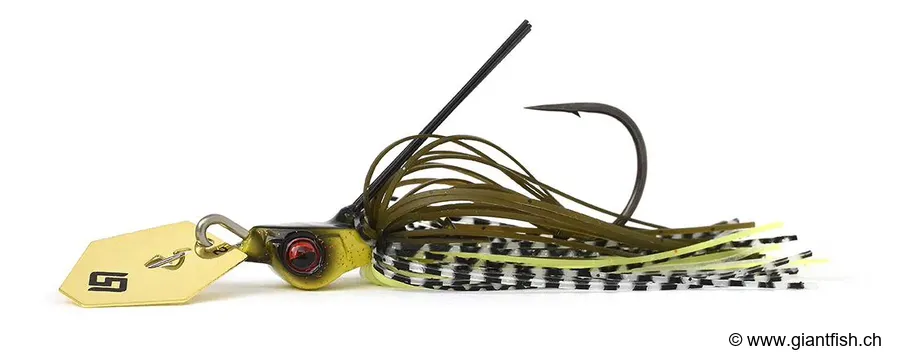
To see the full range, take a look at the selection available here: chatterbait on GiantFish.
There you will find different chatterbait models suited to many fishing situations: fast prospecting, snaggy areas, clear water or colored water. Ideally, you should have several weights and a few complementary colors so you can quickly adapt to the day’s conditions.
Chatterbait FAQ
What is a chatterbait?
A chatterbait is a vibrating lure designed for predator fishing. Thanks to its front blade, it produces strong vibrations as soon as you start retrieving.
Is a chatterbait effective for pike?
Yes, absolutely. Pike react very well to strong vibrations, especially when you are prospecting and around weed beds.
Can you fish for perch with a chatterbait?
Yes. By choosing an appropriate size and a controlled retrieve, a chatterbait can be deadly on active perch.
Chatterbait or spinnerbait?
The two are complementary. A chatterbait produces more vibration, while a spinnerbait relies more on flash and its ability to pass through certain types of cover.
Chatter bate: another way of searching for chatterbait?
The term chatter bate is often used by mistake or as a variant of the word chatterbait. Yet it refers to the same type of vibrating lure, which is formidable for triggering predator strikes.
To wrap up
The chatterbait has truly earned its reputation. Versatile, easy to get to grips with and capable of provoking very aggressive bites, it more than deserves its place among the best predator lures.
Whether you are on the bank of a lake, a canal, a slow river or a snaggy pond, there is a good chance that a well-chosen chatter bait will help you catch more fish. The real secret, in the end, is daring to vary speeds, colors and trailers until you find the combination that triggers bites.
Ready to choose your next chatterbait?
Check out the GiantFish selection and discover the models suited to your next sessions.
See chatterbaits on GiantFish
See other predator lures on GiantFish


